THREE:Romilly also injured his cause by a pamphlet on the criminal law, in which he criticised severely the doctrines of Paley. So strongly was this resented, that in 1810 his bill to abolish capital punishment for stealing forty shillings from a dwelling-house did not even pass the Commons, being generally opposed, as it was by Windham, because the maintenance of Paley¡¯s reputation was regarded as a great object of national concern.[37] That is to say, men voted not so much against the bill as against the author of a heresy against Paley. Thefts without violence should be punished by fine. He who enriches himself at another¡¯s expense ought to suffer at his own. But, as theft is generally only the crime of wretchedness and despair, the crime of that unhappy portion of mankind to whom the right of property (a terrible, and perhaps not necessary right[67]) has left but a bare subsistence; and as pecuniary penalties increase the number of criminals above the number of crimes, depriving the innocent of their bread in order to give it to the wicked, the fittest punishment will be that kind of servitude which[214] alone can be called just, namely, the temporary servitude of a man¡¯s labour and person for the compensation of society, the personal and absolute dependence due from a man who has essayed to exercise an unjust superiority over the social compact. But when the theft is accompanied with violence, the punishment also should be a combination of corporal and servile punishment. Some previous writers have shown the evident abuse that arises from not distinguishing punishments for thefts of violence from those for thefts of cunning, thus making an absurd equation between a large sum of money and the life of a man. For they are crimes of a different nature; and in politics, as in mathematics, this axiom is most certain, that between heterogeneous quantities the terms of difference are infinite; but it is never superfluous to repeat what has hardly ever been put into practice. Political machinery more than anything else retains the motion originally given to it, and is the slowest to adapt itself to a fresh one.
FORE: There is a general theorem which is most useful for calculating the certainty of a fact, as, for instance, the force of the proofs in the case of a given crime:¡ª
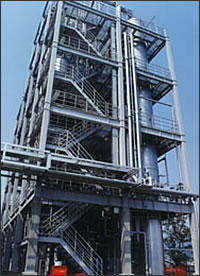
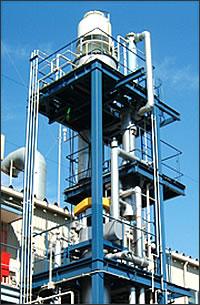
Methanol refinement systems, amyl alcohol refinement systems, ethanol refinement systems, hexanol distillation systems, propanol refinement systems, cyclohexanol distillation systems, isopropanol dehydration systems, ethylene glycol recovery systems, and butanol distillation systems.
FORE:
Hexane distillation systems, tall oil distillation systems, benzene distillation systems, lubricating oil refinement systems, xylene-free distillation systems, low-boiling gas distillation systems, ethylbenzene recovery systems, fusel oil distillation systems, naphthalene distillation systems, propylene recovery systems, and turpentine oil distillation systems.
FORE:What is the political object of punishments? The intimidation of other men. But what shall we say of the secret and private tortures which the tyranny of custom exercises alike upon the guilty and the innocent? It is important, indeed, that no open crime shall pass unpunished; but the public exposure of a criminal whose crime was hidden in darkness is utterly useless. An evil that has been done and cannot be undone can only be punished by civil society in so far as it may affect others with the hope of impunity. If it be true that there are a greater number of men who either from fear or virtue respect the laws than of those who transgress them, the risk of torturing an innocent man should be estimated according to the probability that any man will have been more likely, other things being equal, to have respected than to have despised the laws.
Ether distillation systems, camphor distillation systems, epichlorohydrin distillation systems, aniline distillation systems, dioxane refinement systems, acetonitrile distillation systems, furfural refinement systems, formalin distillation systems, cyclohexane distillation systems, monoethanolamine rectification systems, polyglycol ether distillation systems, dimethylformamide recovery systems, acrylic glycol ether distillation systems, acrylonitrile refinement systems, acetone recovery systems, pyridine distillation systems, methyl ethyl ketone recovery systems, picoline distillation systems, methyl isobutyl ketone recovery systems, and acetaldehyde recovery systems.