THREE:
FORE:ADMIRAL RODNEY BOMBARDING LE H?VRE. (See p. 132.)
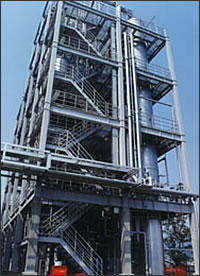
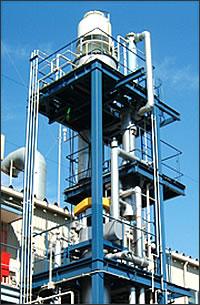
Methanol refinement systems, amyl alcohol refinement systems, ethanol refinement systems, hexanol distillation systems, propanol refinement systems, cyclohexanol distillation systems, isopropanol dehydration systems, ethylene glycol recovery systems, and butanol distillation systems.
FORE:In the early part of the reign the English operas of Augustine Arne, "Artaxerxes" and "Love in a Village"¡ªthe former principally a translation from Metastasio¡ªwere much admired. For the rest, there were numbers of lovers and professors of the art, both in sacred, operatic, and glee music. The Catch Club was formed in 1761, and zealously supported, as well as the Concerts of Ancient Music in 1776. Under the patronage of this society, and particularly of his Majesty, took place the celebrated Handel "Commemoration" in Westminster Abbey, in May and June of 1784. During the early part of the reign, too, appeared several distinguished works in this department. At the head of these stood the "Histories of Music," by Sir John Hawkins and Dr. Burney; Dibdin's "Musical Tour;" Dr. John Browne's "Dissertation on Poetry and Music;" the "Letters" of Jackson, of Exeter; and Mason's "Essays on Church Music." In the later portion of the reign there was much love of music, but little original composition, except for the stage, where Arnold, Shield, Storace, and Dibdin produced the most delightful compositions. Arnold's "Castle of Andalusia," "Inkle and Yarico," "The Surrender of Calais," and "The Mountaineers;" and Shield's "Rosina," "The Poor Soldier," "The Woodman," and "The Farmer," are universally admired. The sea songs of Charles Dibdin are as imperishable as the British navy, to which they have given a renown of its own. He wrote about one thousand four hundred songs, thirty dramatic pieces, "A Musical Tour," and a "History of the Stage," and was allowed, after all, to die in deep poverty, after charming the world for half a century. During the latter part of the reign music was in much esteem, and musical meetings in various parts of the country¡ªin London, the opera, Ancient Concerts, and performances by foreign composers, such as Handel's "Messiah," Beethoven's "Mount of Olives," Mozart's opera of "Don Giovanni," etc.¡ªwere flocked to, but little native genius appeared.With the war the manufacture of guns and arms of all kinds was greatly increased, and several important improvements were made in the construction of gun-barrels and their breeches. All kinds of cutlery were improved, but, at the same time, both Government, by contractors, and foreign countries, by merchants, were imposed on by articles that had more show than use, to the serious injury of the British reputation. Knives and razors were sent out of mere iron, and our pioneers and sappers and miners were often supplied with axes, picks, and shovels more resembling lead than iron.
Hexane distillation systems, tall oil distillation systems, benzene distillation systems, lubricating oil refinement systems, xylene-free distillation systems, low-boiling gas distillation systems, ethylbenzene recovery systems, fusel oil distillation systems, naphthalene distillation systems, propylene recovery systems, and turpentine oil distillation systems.
FORE:Bernadotte took his time, and went. It was in[39] March. At Abo, in a solitary hut, he and Alexander met, and there the final ruin of Napoleon was sketched out by a master's hand¡ªthat of his old companion in arms. Bernadotte knew all the strength and weakness of Napoleon; he had long watched the causes which would ultimately break up the wonderful career of his victories. He listened to the fears of Alexander, and bade him dismiss them. He told him that it was the timidity of his opponents which had given to Napoleon the victories of Austerlitz and Wagram; that, as regarded the present war, nothing could equal his infatuated blindness; that, treating the wishes of Poland with contempt, neglecting the palpably necessary measures of securing his flanks by the alliance of Turkey and Sweden, east and west, he was only rushing on suicide in the vast deserts five hundred miles from his frontiers; that all that was necessary on the part of Russia was to commence a war of devastation; to destroy all his resources, in the manner of the ancient Scythians and Parthians; to pursue him everywhere with a war of fanaticism and desolation; to admit of no peace till he was driven to the left bank of the Rhine, where the oppressed and vengeful nationalities would arise and annihilate him; that Napoleon, so brilliant and bold in attack, would show himself incapable of conducting a retreat of eight hours¡ªa retreat would be the certain signal of his ruin. If he approached St. Petersburg, he engaged for himself to make a descent on France with fifty thousand men, and to call on both the Republican and constitutional parties to arise and liberate their country from the tyrant. Meanwhile, they must close the passage of the Beresina against him, when they would inevitably secure his person. They must then proclaim everywhere his death, and his whole dynasty would go to pieces with far greater rapidity than it grew.Some remarkable commercial reforms were introduced by Robinson and Huskisson in 1824. In the previous year the Chancellor of the Exchequer was able to boast of a very large surplus, and this year he had a surplus of ¡ê1,050,000. Part of it was devoted to the repair and embellishment of Windsor Castle; ¡ê40,000 were devoted towards the erection of rooms for the reception of the library of George III., which was presented to the British Museum by his successor, whose gift, however, was somewhat discounted by the fact that he was with difficulty dissuaded from selling the collection. With ¡ê57,000 Government purchased Angerstein's collection of pictures, which became the nucleus of the National Gallery. But the main object of the Budget was not expenditure but economy. The Four per Cents. were redeemed or exchanged for Three-and-a-Half per Cent. Stock, and a death-blow was given to the old system of bounties by a reduction of that on the herring fishery and the immediate cessation of that on inferior kinds of linen, while that on the higher class of linen was annually decreased ten per cent. There was further a reduction of the duties on rum and coals, with the result, as Robinson prophesied, that lower prices considerably increased the consumption. His greatest innovations, however, concerned the wool and silk trades. In the former there prevailed a great conflict of interests. The agriculturists[241] wished for the prohibition of foreign wool; the manufacturers desired the retention of an export duty, together with free importation. The judicious Chancellor effected a compromise by which the duty on foreign wool was reduced from 6d. to 1d. per pound, while the exportation of English wool was sanctioned on a similar duty. The fear of a large exportation of English wool proved so groundless that by 1826 only 100,000 pounds in weight had been exported, while 40,000,000 pounds of foreign wool had been introduced.
Ether distillation systems, camphor distillation systems, epichlorohydrin distillation systems, aniline distillation systems, dioxane refinement systems, acetonitrile distillation systems, furfural refinement systems, formalin distillation systems, cyclohexane distillation systems, monoethanolamine rectification systems, polyglycol ether distillation systems, dimethylformamide recovery systems, acrylic glycol ether distillation systems, acrylonitrile refinement systems, acetone recovery systems, pyridine distillation systems, methyl ethyl ketone recovery systems, picoline distillation systems, methyl isobutyl ketone recovery systems, and acetaldehyde recovery systems.